Product integration link building is now one of the most effective Product-led Link Building Strategies behind successful link building campaigns. Most Link Building Strategies fail because they chase a single contextual link through cold outreach, but Product-led link building works differently. It starts by solving the problems your target audience faces with the features your product/service offers, and turns that real solution into linkable content assets and Product-Led Content Assets that partner sites actually want to feature. When your product connects with tools your target audience already uses, those partner sites link to your commercial landing pages and Product Pages from their integration directories, editorial blog posts, and Digital PR announcements, whether as dofollow or Nofollow links. Those links do more than add backlinks. They strengthen brand reputation, grow Brand Mentions and entity recognition across search engines, and drive qualified organic traffic from high-intent searches that converts. In this guide, you will get a proven Product integration link building template, a real Product integration link building example, and a step-by-step system to find a competitor backlink gap, run adjacent niche outreach, and build Content Assets that turn every integration into measurable results and direct business impact.
What is Product Integration Link Building and How Does It Work?
Product integration link building earns high-authority backlinks by connecting technical software features directly with partner product ecosystems.
Core Definition and Technical Utility Exchange
Digital platforms acquire high-authority backlinks when engineering teams build functional connections between complementary software tools. Companies exchange real product utility for permanent listings across official partner directories, technical documentation hubs, and co-marketing blog posts.
Partnerships teams prioritize product-led link building because technical interoperability creates mutual value for shared customer bases. Engineering teams connect APIs, webhooks, and browser extensions to automate workflow friction for active software users.

Traditional Link Building versus Product Integration Partnerships
Traditional outreach relies on manual email pitches, guest blogging, and sponsored content placement. Product integration link building replaces manual pitches with functional product interoperability that partner marketing teams willingly feature.
Search engine crawlers pass substantial equity through integration pages because these links sit on main root domains. Partners maintain control over outbound link attributes, but real software integrations earn followed editorial citations naturally.
Why are Product-Led Link Building Strategies Effective for SEO and Business Growth?
Product-led link building strategies deliver unmatched topical relevance, high domain authority, accelerated sales velocity, and strong customer retention.

Search Engine Rankings and Organic Traffic Benchmarks
Search engines prioritize topical relevance when evaluating domain backlink profiles. Industry data shows that 58.6% of SEO leaders rank topical relevance as the single most critical link quality factor.
Top-ranking pages on Google maintain 3.8 times more total backlinks than pages occupying positions 2 through 10. Page 1 search results average a median of 907 referring domains across competitive industry queries.
Referring domain counts demonstrate a 0.255 correlation with Page 1 Google rankings, outperforming generic Domain Rating scores at 0.131. Search crawlers reward pages backed by diverse, topically relevant root domains.
SEO specialists prioritize link building to commercial landing pages and core product pages at a rate of 52.7%, compared to 38.4% for informational blog posts. Product integration links direct high page authority straight to core functional URLs.
Traditional paid placements carry high financial inefficiencies. Quality guest posts cost an average of $459 per single contextual link, while 43% of DR 30+ publisher websites receive fewer than 1,000 organic visits monthly. Integration campaigns yield 2 to 10 permanent backlinks per partner launch.
AI Search Visibility and Brand Mention Correlations
Generative search engines evaluate brand reputation alongside traditional backlink metrics. Correlation studies reveal a 0.65 relationship between Google Page 1 organic positions and ChatGPT brand mentions.
Google AI Overviews show a 0.664 correlation with branded web mentions across 75,000 analyzed brand profiles. Branded web mentions impact AI Overview indexing three times more than raw backlink volume at 0.218.
Product integration link building generates verified entity recognition across authoritative developer hubs and marketplace directories. Search engine crawlers index these technical citations to validate software entity authority.
SaaS Ecosystem Scale and Market Integration Gaps
Leading software platforms operate massive marketplace ecosystems that capture millions of search queries. Zapier hosts over 9,000 connected applications with 66,000 triggers and actions, generating 299,000 monthly organic visits across 43,000 programmatic directory pages.
HubSpot App Marketplace manages over 2,000 active apps with 2.5 million installs. Shopify App Store features over 21,000 active merchant applications. Salesforce AgentExchange lists over 9,000 partner solutions installed across 91% of enterprise accounts.
Enterprise organizations operate an average of 155 software applications, while large enterprises run 897 tools. MuleSoft benchmark reports confirm that companies connect only 24% of these systems, creating a massive integration gap.
Revenue Generation, Deal Velocity, and Customer Retention
Software buyers evaluate technical interoperability during initial purchasing evaluations. Benchmark studies reveal that 76% of IT buyers list tech stack integrations as a primary buying condition.
Partner-influenced sales opportunities demonstrate a direct business impact by closing 53% more frequently. Ecosystem deals close 46% faster and generate 48% higher Annual Contract Values.
Product integrations drive customer retention across active user accounts. Customers deploying 1 integration achieve 10% to 15% higher retention, while users connecting 4 or more integrations experience a 35% to 58% reduction in customer churn.
Which 6 Types of Integration Backlinks Can You Earn?
Companies earn six distinct backlink types across partner directories, app market stores, developer docs, co-marketing blogs, automation templates, and embeddable widgets.
| Link Source Type | Location / URL Pattern | Link Equity & Attributes | Primary SEO & Business Value |
|---|---|---|---|
| Partner Integration Page | Root domain (/integrations/) | High DR, Editorial Dofollow | Highest page authority & domain juice |
| App Marketplace Listing | App Store (/apps/partner) | High Authority, Nofollow/Redirect | Strong entity signals & buyer referral traffic |
| Developer Documentation | Help Hub (/docs/setup-guide) | Contextual Dofollow/Nofollow | Topical relevance & developer search indexing |
| Co-Marketing Blog Post | Blog (/blog/partner-launch) | Editorial Dofollow Anchor | Rapid indexation & targeted launch traffic |
| Workflow Template Library | Automation Hub (/templates/) | Programmatic Keyword Pages | Long-tail search intent & brand visibility |
| Embeddable Product Asset | Client Site (Widget/Form) | Scalable Contextual Backlinks | Continuous backlink accumulation & referral user acquisition |
1. Partner Integration Directory Pages
Partner integration directory pages sit directly on the root domain of established software companies. SEO teams secure high domain equity when partner sites publish permanent editorial dofollow links pointing to commercial landing pages.
2. App Marketplaces and Software Ecosystem Stores
App market stores operate inside major software ecosystems such as Shopify, HubSpot, and Salesforce. These marketplace listings pass powerful brand reputation signals and direct qualified buyer traffic to product registration forms.
3. Technical Documentation and Help Center Setup Guides
Technical support documentation provides step-by-step instructions for connecting software applications. Developer documentation writers embed contextual links within setup articles, enhancing long-tail search indexing.
4. Co-Marketing Blog Posts and Product Release Notes
Co-marketing blog posts announce new technical connections to joint user communities. Editorial blog posts pass immediate link authority through customized brand anchor text during joint release announcements.
5. Workflow Automation Template Libraries
Workflow automation libraries host pre-built integration templates on platforms like Zapier and Make. These programmatic pages target high-volume search queries and reinforce brand entity recognition across search engines.
6. Embeddable Product Widgets and Badges
Embeddable product widgets allow customers to display tools, calculators, and forms directly on external websites. Software vendors accumulate scalable contextual backlinks by placing natural attribution tags on public embed assets.
How Do You Execute Successful Link Building Campaigns Step-by-Step?
Executing successful link building campaigns requires ecosystem auditing, lightweight integration development, dedicated landing page setup, launch kit packaging, and tier-2 link extraction.

Step 1: Partner Ecosystem Audit and Prospecting
Partnerships teams begin by auditing current software usage across existing customer databases. Support tickets, sales conversation transcripts, and user reviews identify complementary tools that upstream or downstream users deploy.
SEO specialists conduct competitor backlink gap audits using Ahrefs or Semrush. Analyzing competitor referring domains uncovers target partner sites that maintain active integration directories.
Technical auditors evaluate target domain link attributes to confirm indexing viability. Prospecting teams verify whether target partner pages render static HTML dofollow links or restricted JavaScript redirects.
Step 2: Minimum Viable Integration (MVI) Development
Engineering teams build lightweight Minimum Viable Integrations to solve specific problems your target audience faces. Product managers prioritize simple API webhooks and browser extension overlays over complex custom software builds.
Development teams leverage features your product offers to create automated data triggers. Utilizing no-code middleware platforms like Zapier or Make enables rapid software connectivity without draining engineering bandwidth.
Step 3: Integration Landing Pages and Product-Led Content Assets
Marketing teams publish dedicated landing pages on root domains using clean URL structures. Creating product-led content assets at target integration directories maximizes search engine indexing.
Landing page designers structure pages with clear workflow explanations, step-by-step setup guides, visual UI screenshots, walkthrough videos, and schema FAQs targeting specific integration queries.
Internal linking specialists insert contextual links from integration landing pages to core feature pages. Passing internal PageRank distributes accumulated backlink equity across commercial product pages.
Step 4: Partner Launch Kit Packaging and Listing Submission
Marketing managers submit completed application profiles to official partner directories. Providing complete product integration link building examples simplifies partner review procedures.
Partnership teams deliver ready-to-publish Partner Launch Kits to reduce partner effort. Launch kits include 50-word summaries, 300-word value descriptions, co-branded visual assets, and preferred brand anchor text guidelines.
Step 5: Post-Launch Outreach and Tier-2 Link Extraction
Outreach managers contact partner marketing leads immediately after marketplace approvals. Partnerships teams execute adjacent niche outreach to request cross-linking between mutual technical documentation hubs.
Co-marketing teams interview mutual customers to publish joint case studies. Securing co-branded case study features extracts secondary contextual backlinks from partner newsrooms.
Step 6: Programmatic Scaling and Master Link Tracking
Operations managers build standardized templates to scale partner onboarding across dozens of software vendors. Standardizing outreach workflows accelerates integration link acquisition.
SEO analysts maintain master tracking spreadsheets to monitor active partner backlinks. Tracking systems record partner domain authority, link placement status, indexation dates, and monthly referral traffic.
What Outreach Templates, Search Operators, and KPIs Drive Campaign Success?
Campaign success relies on precise Google search operators, field-tested partner outreach templates, and rigorous KPI conversion tracking.

Google Search Operators for Opportunity Discovery
SEO researchers deploy targeted Google search operators to locate partner integration directories. Queries such as search operator keywords for industry niches and product categories uncover potential partner pages.
Competitive analysts use site-specific operators to uncover competitor marketplace footprints. Running targeted domain search operators maps out complete competitor partner networks.
Outreach Email Templates for Partner Pitching
Partnership managers deploy a field-tested product integration link building template to request directory placements. Outreach emails highlight live workflow pages and offer reciprocal promotion to eliminate friction.
Sample Pitch: ‘We launched a functional integration that enables your users to automate workflow friction. We published a dedicated setup guide on our integrations directory. We are excited to feature your product across our platform. Would your team be open to listing our integration on your partners directory? We can provide pre-formatted descriptions, screenshots, and visual assets.’
Key Performance Indicators and Campaign Conversion Metrics
Campaign managers measure the Integration-to-Link Conversion Rate across active partner relationships. Successful link building campaigns convert 60% to 80% of live software integrations into permanent partner backlinks within 60 days.
SEO leads track net referring domain growth, organic keyword rankings, referral sessions, and qualified pipeline value generated by partner referral traffic.

What Risks and Common Pitfalls Should You Avoid?
Avoiding campaign risks requires strict compliance with Google link spam policies, genuine technical utility, and natural anchor text distribution.
1. Search Engine Link Spam Guidelines Compliance
Search engines enforce strict webspam policies regarding artificial link manipulation. Automated mutual link exchanges arranged purely to trade PageRank violate search engine guidelines.
Commercial listing managers apply sponsored link attributes to paid directory placement tiers. Legitimate integration links earned through functional software interoperability pass organic link equity safely.
2. Shallow Integration Risk and Anchor Text Safety
Engineering teams avoid building shallow or paper-thin integrations solely to request directory links. Partner review teams reject low-quality applications that lack true functional utility.
SEO leads enforce anchor text diversity across all partner listing submissions. Utilizing natural brand anchors prevents exact-match money keyword over-optimization penalties.
Can you request link insertions on existing partner articles?
Yes, adding contextual links to active partner guides passes instant PageRank. Partner sites accept niche link insertion outreach for relevant product updates.
Should you claim unlinked brand mentions from partner sites?
Yes, converting plain-text brand citations into live links yields high-value backlinks. Partner directories often contain unlinked brand mentions that require quick outreach.
Does the Skyscraper Technique help create better integration assets?
Yes, publishing superior integration guides attracts more partner backlinks. Creating upgraded content relies on the Skyscraper Technique to outperform existing resources.
Does broken link building help recover lost partner links?
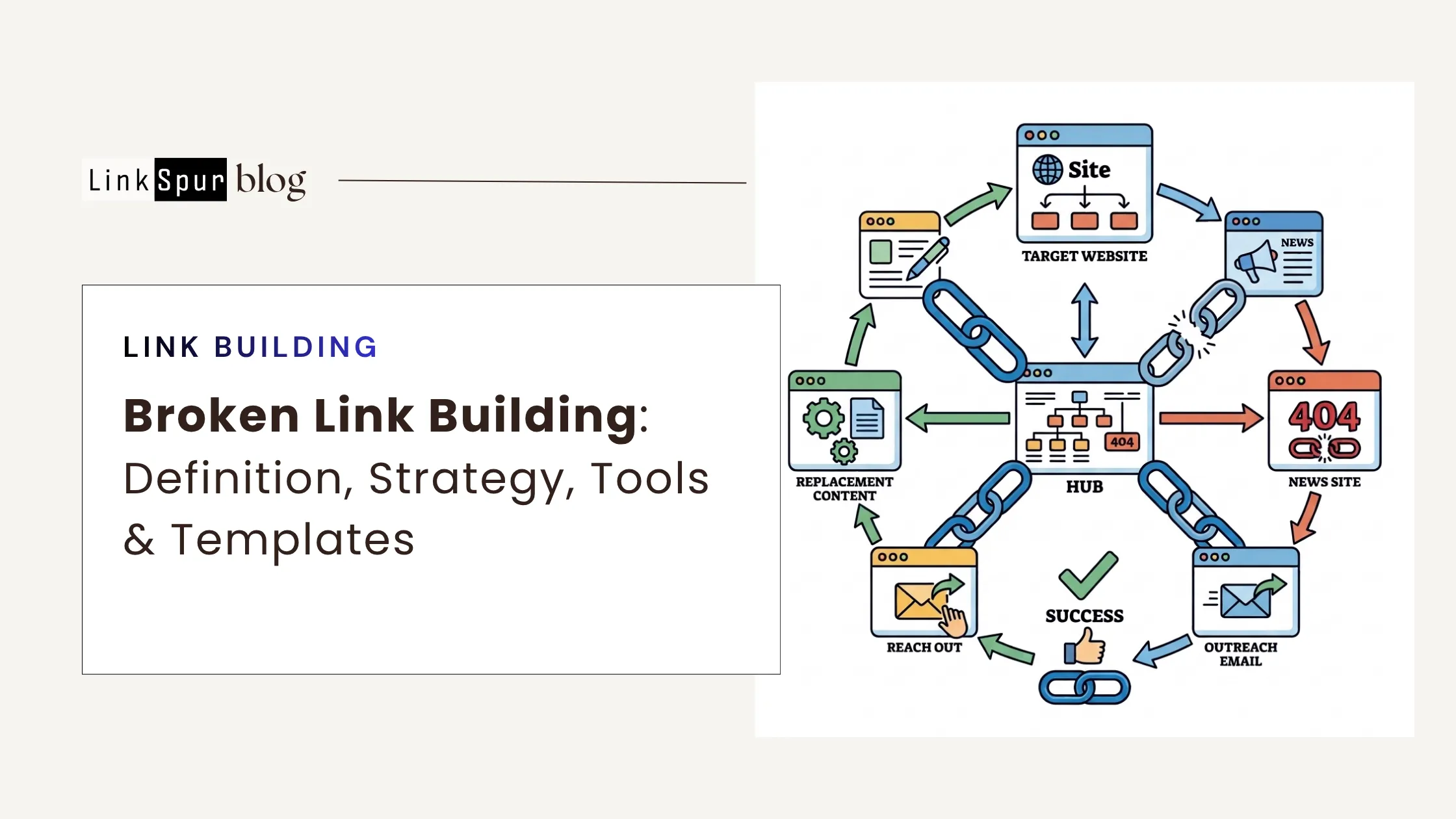
Yes, replacing broken 404 URLs on partner sites secures fast link wins. Technical teams use broken link building workflows to fix dead directory URLs.
Does integration link building drive long-term SaaS SEO growth?
Yes, product integration links build domain authority and user retention. Tech platforms scale faster by executing targeted SaaS link building strategies.
Can you feature new product integrations in Digital PR pitches?
Yes, pitching integration launches to industry media earns high-authority press links. Media outlets feature major software partnerships through Digital PR campaigns.
Is guest blogging with integration partners worth the effort?
Yes, publishing joint technical posts on partner blogs secures contextual backlinks. Engineering teams gain referral traffic by pitching partner guest posts.
Do integration landing pages serve as permanent linkable assets?
Yes, purpose-built integration hubs earn continuous organic links from developers. Specialized technical hubs function as high-performing linkable assets.